How Newton’s Housing Options Support Different Senior Living Plans
June 11, 2026
June 11, 2026
If you or a parent are trying to plan the next chapter in Newton, you already know the choice is bigger than simply deciding whether to move. In a high-cost city where many older adults have owned their homes for years, the real question is often which housing path best fits your budget, mobility, daily routine, and support needs. This guide will walk you through the main senior living options in Newton, from staying put with home updates to downsizing or exploring service-enriched housing, so you can make a clearer, less stressful decision. Let’s dive in.
Newton has a large older-adult population, with 19.1% of residents age 65 or older. It is also a mostly owner-occupied city, with a 70.0% owner-occupied housing rate, which means many senior households are deciding what to do with a home they have owned for a long time.
Cost matters here, too. The median owner-occupied home value is $1,264,900, and the median gross rent is $2,370. That makes senior housing decisions in Newton less about finding cheap options and more about matching the right home and support level to your needs.
Newton’s housing mix also helps explain the choices in front of you. The city includes single-family homes, condos, two-family homes, apartments, and a smaller number of accessory apartments, which gives you several directions to consider depending on how much space, maintenance, and help you want.
For many older adults, the best first question is not “Where should I move?” but “Can this home work better for me?” If your current home is in the right location and still feels emotionally and financially manageable, aging in place may be a strong option.
Newton supports this path in a few practical ways. The city allows one accessory dwelling unit, or ADU, on a single-family or two-family home regardless of zoning district, and the city says ADUs can help seniors remain in their homes. That can create flexibility for a caregiver, family member, or a smaller living arrangement on the same property.
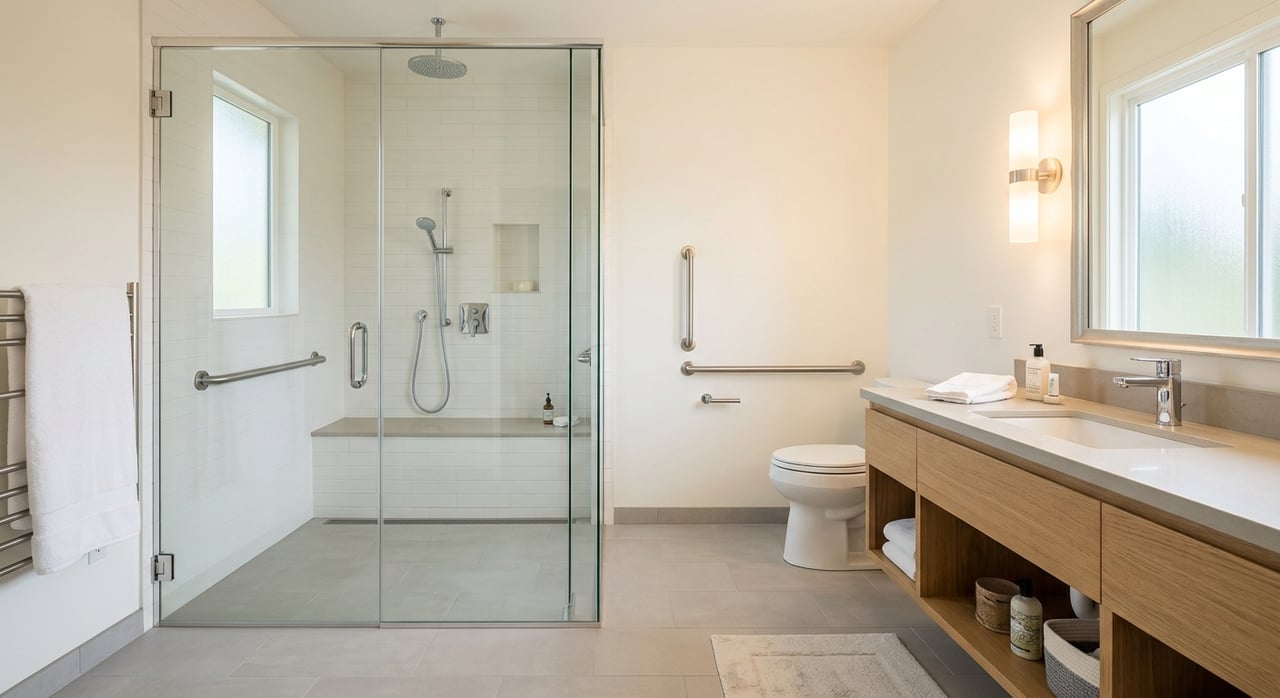
Home modifications may also help you stay safely in place. Newton’s Housing Rehabilitation Program offers zero-interest deferred-payment assistance for eligible homeowners and condo owners, and eligible improvements include ramps, stair lifts, accessible bathrooms, structural repairs, and hazard abatement.
Massachusetts also offers support through the Home Modification Loan Program, known as HMLP. For residents over 60 or with disabilities, eligible uses can include ramps, stair lifts, platform lifts, and ADUs, with 0% deferred-payment loans available to qualifying applicants.
Newton has made accessibility a stated priority. Its Housing and Community Development division says removing architectural barriers and improving access and mobility for older adults and people with disabilities is important work, which is useful to know if you are planning long-term rather than reacting to a sudden change.
Aging in place can be a good fit if:
Housing is only one piece of the plan. Newton’s Older Adult Services can also help with resource navigation, SHINE Medicare counseling, home-care referrals, utility and fuel assistance, and transportation support.
That matters because a home can remain workable longer when the right services are in place. In many senior moves, support systems are just as important as square footage.
If your current house feels too large, too stair-heavy, or too demanding, downsizing may offer a more manageable next step. In Newton, this often means moving from a larger single-family home into a condo, apartment, or smaller home with less upkeep.
The financial side is important to understand. For FY2026, Newton’s median assessed single-family home value is $1,503,500, while the median assessed condominium value is $813,500. A condo may reduce maintenance and simplify daily life, but it still comes with a significant price tag in this market.
That said, downsizing is not always about spending less each month. Sometimes it is about reducing chores, eliminating stairs, improving layout, or moving closer to everyday services.
Newton’s village and neighborhood centers are designed around sidewalks, parking, and a mix of shops and services. The city identifies village centers such as Newton Center, Newtonville, Nonantum, and West Newton, which can make day-to-day errands and appointments more convenient.
For some older adults, that kind of setup supports independence. A smaller home near services may be easier to manage than a larger property that requires more driving, more maintenance, and more effort to keep up.
Before you sell and buy, think through a few practical questions:
Newton may also see more multifamily options over time. The city is fully compliant with the MBTA Communities law as of March 2025, and it says the Village Center Overlay District and missing-middle zoning should broaden future multifamily housing choices near transit.
For some households, the right move is not simply smaller housing. It is a setting with more built-in support, whether that means subsidized senior apartments, service-enriched housing, or a transition to independent living or assisted living.
Newton has meaningful senior-housing resources, but planning ahead matters. The city’s affordable-housing review from June 2025 found that 1,070 units were senior housing, representing 54% of the affordable rental stock, and 65% of those senior units were priced at 60% of area median income or lower.
That said, availability can still be limited. Newton’s affordable ownership supply is much smaller, at 88 units, or about 0.4% of owner-occupied housing, so deed-restricted ownership opportunities are far less common than rental-based options.
The city also notes that 301 affordable units face expiration within the next 10 years, including 51 units at risk in 2026. For seniors and families exploring these options, that is a reminder that waitlists, preservation efforts, and timing are all part of the picture.
Newton’s housing resources page points residents toward subsidized apartments and long-term care resources. The city also notes that housing authorities often give priority to residents, people with disabilities, people experiencing homelessness, and adults age 62 and older for senior housing.
The city identifies major senior-housing providers that include the Newton Housing Authority, 2Life Communities, and the Newton Community Development Foundation. One local example is Coleman House in Newton Highlands, which the city says provides housing and supportive services to 146 very low- and extremely low-income senior households.
Housing choice is closely tied to transportation. Newton supports older adults through GoGo Newton, which offers 24/7 rides that can begin or end in Newton and can serve major Boston hospitals, including Mount Auburn Hospital in Cambridge.
The Cooper Center also plays an important role. It is open seven days a week and serves as the city’s older-adult services hub, which can make independent living more practical for seniors who need reliable support and information.
Newton’s own needs assessment found that finances, housing, and transportation were the top three concerns reported by older adults. That lines up with what many families feel in real life: the best housing decision is usually the one that balances all three.
A simple way to compare your options is to think in terms of fit, not just property type. Ask whether a home supports your current mobility, your likely needs over the next few years, your monthly budget, and the level of help available nearby.
Here is a practical way to think about the main paths in Newton:
| Option | Best for | Main advantage | Main challenge |
|---|---|---|---|
| Stay in current home with modifications | Seniors who like their location and need better accessibility | Familiar setting with targeted updates | Home may still require ongoing maintenance |
| Move to condo or smaller home | Seniors who want less upkeep while staying in ownership | Simpler day-to-day living | Newton prices remain high |
| Move to affordable or service-enriched senior housing | Seniors who want more built-in support or lower-cost rental options | Greater support structure | Waitlists and limited availability |
You do not have to sort through every option on your own. Newton’s Resource Navigator can help with housing application questions, and the city directs residents to CHAMP and Housing Navigator Massachusetts for affordable-housing searches.
If budget is part of the decision, local tax relief may also help some homeowners stay put longer. Newton offers elderly exemptions, a senior property tax work-off program, and tax assistance resources for lower-income homeowners, and the city notes that elderly exemptions are based on age and income requirements rather than assessed value alone.
SHINE counseling through the Cooper Center can also be useful when comparing housing costs with medical and coverage-related expenses. If you are deciding between independent living, assisted living, or staying home with support, looking at the full monthly picture is essential.
Even when the right answer is clear, the logistics can feel heavy. A senior move often involves years of belongings, emotional decisions, timing concerns, and the need to coordinate repairs, cleaning, movers, or a future sale.
That is why having a step-by-step plan matters so much. When you break the process into manageable pieces, from evaluating the home to comparing housing options and lining up practical help, the move becomes far less overwhelming.
In Newton, the strongest long-term paths often come down to three choices: stay in place with smart modifications, rightsize into a smaller home or condo, or move into service-enriched senior housing. The right fit depends on your needs, but thoughtful planning can give you more control and more peace of mind.
If you are sorting through a senior move in Newton, Elder Moves Real Estate can help you create a clear plan with compassionate, concierge-style guidance every step of the way.
We deliver exceptional results with humor, sincerity, and good business practices. Our dynamic duo understands that the process of moving involves more than just buying or selling a home; it involves orchestrating a seamless logistical and compassionate experience for seniors. Contact us today to find out how we can be of assistance to you!