The Aging-in-Place Upgrade That Can Fail Brookline's Pre-Sale Fire Inspection
September 3, 2026
September 3, 2026
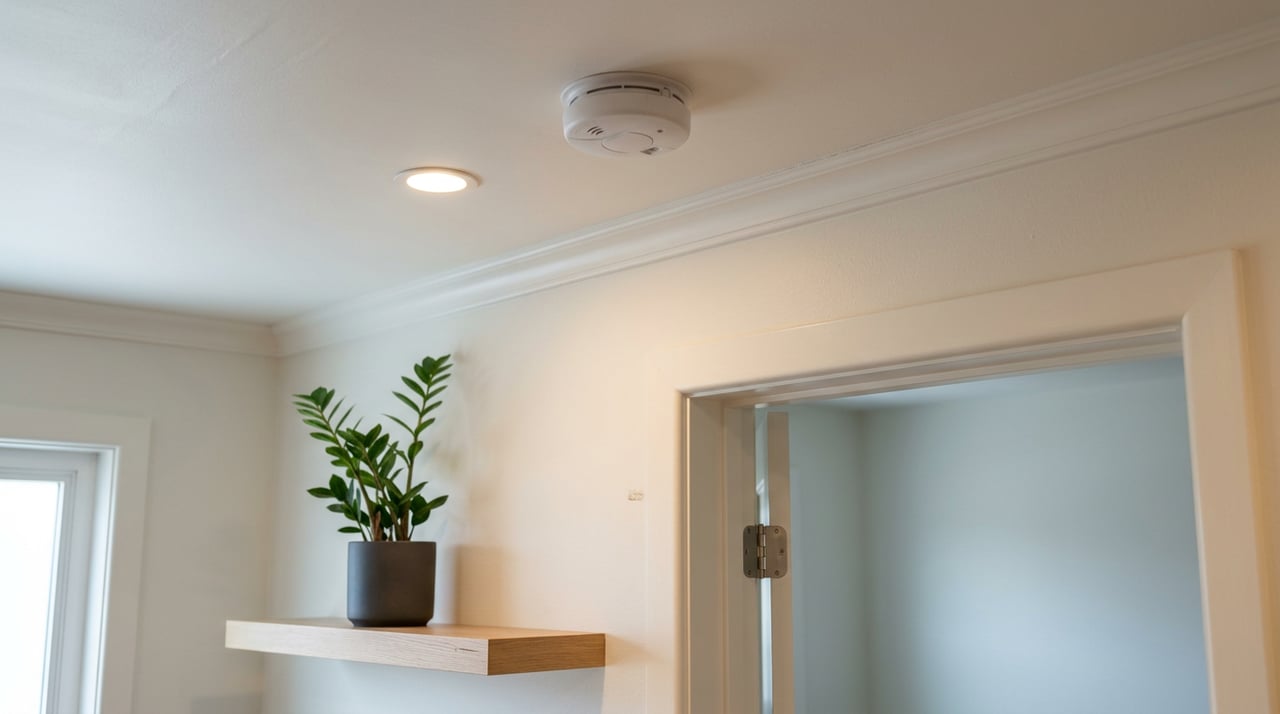
A family widens a doorway and swaps a tub for a curbless shower so a parent can stay in the Brookline house a few more years. A year or two after that, someone adds a NEST Protect in the hallway, mostly for the peace of mind of a remote alert if something goes wrong. Both moves are sensible. Both are the kind of thing this brand spends its days helping families think through. And both, combined, can be the reason a home fails its town-mandated fire inspection the week before closing.
That is not a hypothetical built from nothing. It follows directly from how Brookline's Fire Prevention office classifies a house for smoke detector compliance, and it is a wrinkle that generic "Massachusetts smoke detector law" guides do not mention, because it depends on a fact only the Brookline fire department checks: not just when a house was built, but when it was last substantially renovated.
Massachusetts General Laws Chapter 148, Section 26F requires a fire department inspection and a certificate of compliance before any one- or two-family home can be sold. In Brookline, that means registering online with the town's Fire Prevention office and printing a 26F certificate once the inspection passes. Banks require it to release closing funds, so a sale cannot proceed without one.
The detail that trips people up is what "compliant" means for a given house. The state's rules for smoke and CO detectors are keyed to construction and renovation dates, not to how old the house feels or how recently someone updated the kitchen.
Brookline's own guidance draws a line that most sellers never think to check. Hardwired NEST smoke and CO devices are allowed in homes that were built or substantially renovated between 1975 and 2008. Homes built or substantially renovated after 2008 are a different story entirely, and it's because of an unrelated requirement: any home built after 2008 with a garage needs a heat detector installed in that garage, and NEST does not currently make a device that satisfies it. The result is that NEST systems, hardwired or not, are not permitted in homes that fall into the post-2008 bucket.
Here is where the aging-in-place irony lands. A Brookline colonial built in 1925 is, on its face, an old house with old-house rules. But if that same house had a first-floor primary suite added, a kitchen gutted, or a bathroom rebuilt for accessibility in, say, 2015, the fire department can treat the relevant portions of that house as a post-2008 structure for compliance purposes. The renovation that made the home safer to live in day to day can be the same renovation that disqualifies the smart detector installed to make it safer to monitor from afar.
This matters most for exactly the households this brand works with: longtime Brookline owners who renovated once, a decade or so ago, specifically to help a parent or spouse stay home longer, and who added consumer smart-home devices afterward without ever connecting the two dates.
| Home built or substantially renovated | Detector requirement | Where NEST fits |
|---|---|---|
| 1975–2008 | Hardwired smoke and CO alarms with battery backup | Hardwired 120-volt NEST devices are allowed |
| After 2008 (with a garage) | Hardwired system plus a heat detector in the garage | Not allowed. No NEST device currently meets the garage heat detector requirement |
| Before 1975 | Battery-powered units generally acceptable, replace any detector of uncertain age | Brookline evaluates battery-operated NEST units under a separate set of conditions posted on its site |
The practical takeaway is not "avoid NEST." It's "know which era your house falls into before you buy or keep a smart detector," because the inspector is checking against the renovation record, not against what feels intuitive.
Even a fully compliant house can stall on logistics. Brookline runs its 26F inspections in a single one-hour window, 9:30 to 10:30 AM, Monday through Friday, and asks applicants to propose three possible dates that are each at least 14 days out. That is a longer runway than neighboring Boston, where the fire department asks for a minimum of 10 business days' notice. Fourteen days does not sound like much until you are coordinating a parent's move from out of state, managing a listing timeline, and discovering the inspection can only happen on a weekday morning.
Then there is the alarm company rule. If the home is connected to a central station monitoring service such as ADT, a technician from that company has to be physically present for the test. Brookline is explicit that failing to have the alarm company there results in immediate failure of the inspection, regardless of whether the detectors themselves are working. For a family managing a senior's move from a different time zone, that means coordinating three separate schedules, the fire department's one-hour window, the alarm company's technician, and whoever is authorized to let the inspector into the house, before a certificate can even be attempted.
If a Brookline home has been substantially renovated at any point since the mid-1970s, the renovation date belongs on the same short list as the roof and the boiler when you're getting ready to list. Two questions are worth answering before a house goes on the market, not after an offer is accepted:
First, does the house, or the room where the detectors live, fall into the 1975–2008 window, the post-2008 window, or neither? A permit history or a conversation with Brookline's building department can settle this faster than guessing.
Second, is the house on a monitored alarm system, and if so, has the alarm company been told to plan for an inspection date two to three weeks out? Waiting until there's a signed purchase and sale agreement to make that call is how sellers end up asking their attorney for a closing extension over a detector.
Does an older home still need a garage heat detector? Only if the home, or at least the garage and the systems tied to it, was built or substantially renovated after 2008. A prewar Brookline house that has never had major work done to it is evaluated under older rules.
Can I schedule the inspection before I have an accepted offer? Yes, and given the 14-day minimum lead time and the possibility of a failed first attempt, scheduling as soon as a home is listed, rather than waiting for a buyer, is the more comfortable path.
What if some of my detectors are unmarked or I'm not sure how old they are? Brookline's own guidance recommends replacing any detector whose age is uncertain before the inspection rather than risking a failed test over a device that might be fine.
Details like a renovation date buried in an old permit file are exactly the kind of thing that gets missed when a family is juggling a parent's move, a house full of decades of belongings, and a closing date all at once. That coordination, tracking down the permit history, calling the alarm company, booking the inspection window before it becomes a bottleneck, is the quieter half of what a senior move actually requires.
Don't know where to start? Let's connect. Elder Moves Real Estate works through this level of detail with Brookline families every day, so the fire department's calendar never becomes the reason a closing slips.
We deliver exceptional results with humor, sincerity, and good business practices. Our dynamic duo understands that the process of moving involves more than just buying or selling a home; it involves orchestrating a seamless logistical and compassionate experience for seniors. Contact us today to find out how we can be of assistance to you!